
Industrial robot automation is a modern manufacturing approach in which repetitive, precision-critical, and high-speed production tasks are performed by robotic systems integrated with intelligent automation technologies.
Industrial robot automation is a modern manufacturing approach that enables repetitive, precision-demanding, or high-speed production processes to be managed using robotic systems and intelligent automation technologies.
Today, manufacturing facilities aim not only to increase production output but also to achieve higher quality, lower error rates, and sustainable manufacturing performance. At this point, industrial robot automation has become one of the most important investments for businesses seeking to enhance their competitiveness.
Robotic automation systems have become an indispensable part of production, particularly in plastic injection molding, IML (In-Mold Labeling), packaging, and high-volume manufacturing applications.
How Does Industrial Robot Automation Work?
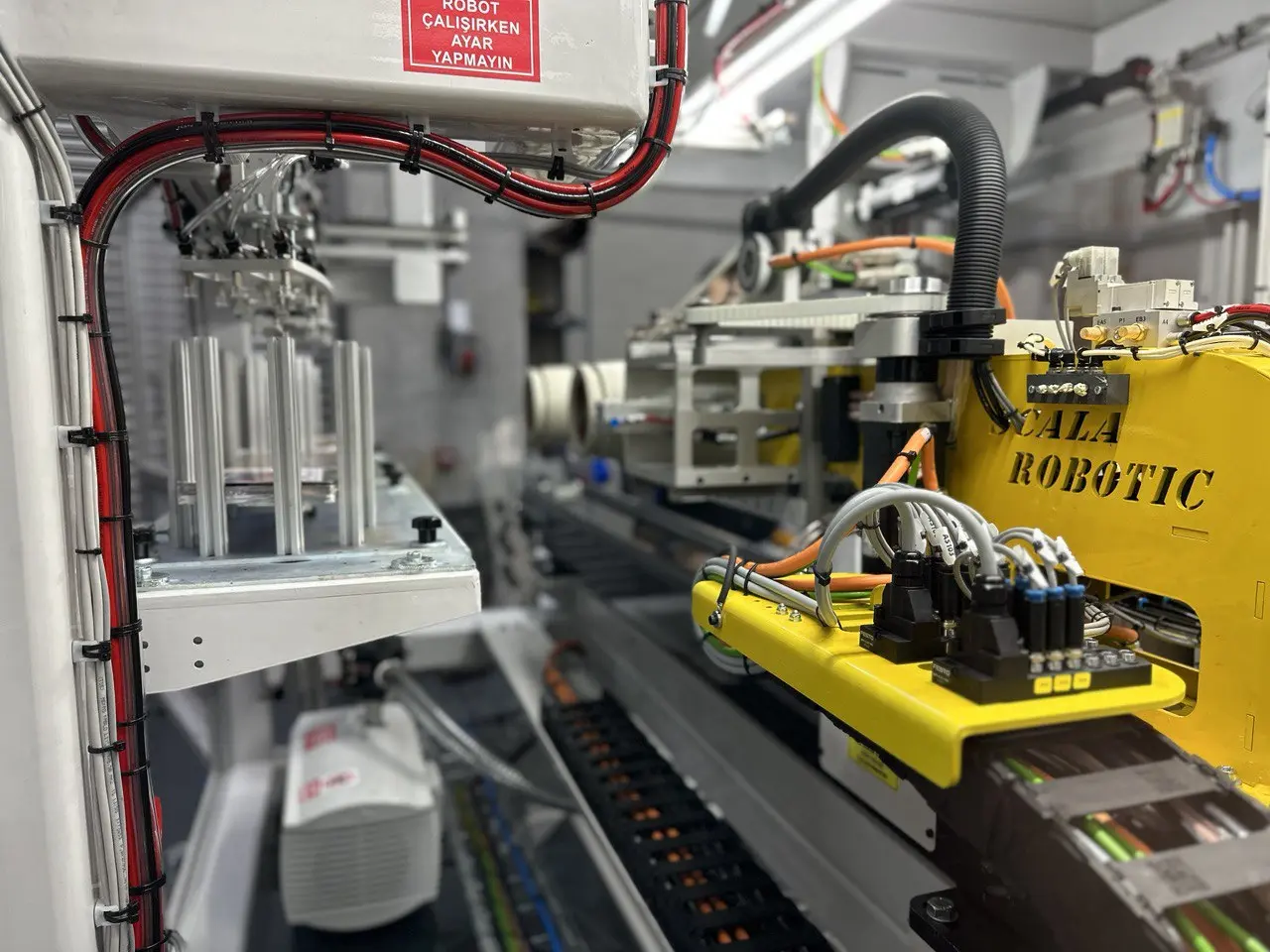
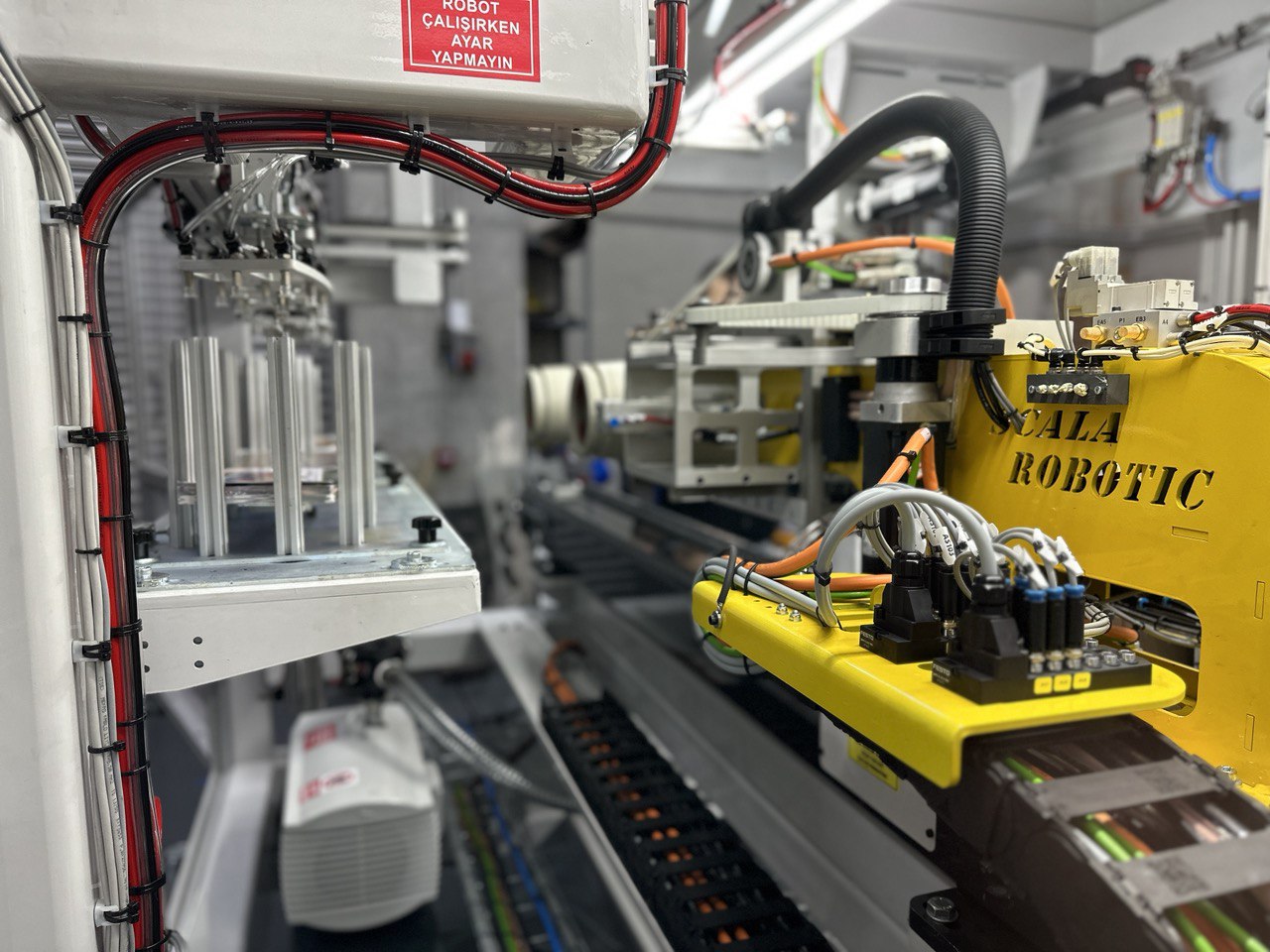
A robot automation system consists of much more than just the robot itself. The entire production line becomes fully automated through the seamless integration of various automation components.
These systems typically include the following components:
- Industrial robots
- Servo motion systems
- PLC control systems
- Vision inspection systems
- Conveyor systems
- Sensors
- Safety systems
- Operator control panels
All equipment communicates through a centralized control system, ensuring continuous and fully controlled production.
Advantages of Robot Automation in Manufacturing
Higher Production Speed
Robotic systems can perform the same operation continuously at high speed. Reduced cycle times result in increased production capacity.
Maximum Precision
Human positioning errors are eliminated. In particular, label placement accuracy in IML applications directly affects product quality.
Continuous Production
Robots can operate continuously without being affected by shift changes or operator performance, ensuring uninterrupted production.
Lower Error Rate
Standardized robotic movements maintain consistent product quality throughout every production cycle.
Improved Workplace Safety
Risky operations such as handling heavy loads, working with hot molds, and high-speed production are performed by robots, significantly improving operator safety.
Lower Operating Costs
Reduced production errors, lower scrap rates, and higher manufacturing efficiency help optimize overall operating costs.
Where Is Industrial Robot Automation Used?
Robot automation is widely used across many different manufacturing industries.
The primary application areas include:
- Plastic injection molding
- IML production lines
- Plastic packaging manufacturing
- Food packaging
- Chemical and cleaning products
- Industrial packaging production
- Automotive supplier industry
- Medical product manufacturing
- Logistics and packaging systems
The Importance of Robot Automation in IML Production Lines
Since cycle times in IML production are extremely short, robotic systems must operate with exceptional precision.
During the production process, the robot performs the following operations:
- Picks up the label
- Places it inside the mold
- Removes the finished product from the mold
- Transfers it to the quality inspection system
- Places it onto the conveyor
All of these operations are completed within just a few seconds.
Therefore, controlling robot movements with millisecond-level accuracy forms the foundation of production quality.
The Role of Vision Inspection Systems in Robot Automation
In modern manufacturing lines, production alone is no longer sufficient. Product quality inspection is also carried out automatically.
Vision systems can perform the following inspections in real time:
- Label positioning
- Print quality
- Product orientation
- Missing label detection
- Printing defects
- Product deformation
These systems automatically separate defective products, helping maintain consistent quality standards throughout production.
Complete Automation with Conveyor Systems
Conveyor systems are another essential component of robot automation.
Conveyors create a continuous production flow by connecting the following processes:
- Product transfer
- Robot feeding
- Quality inspection
- Packaging
- Palletizing
A properly designed conveyor system directly improves the efficiency of robotic operations.
ScalaRobotic Industrial Robot Automation Solutions
ScalaRobotic enhances production processes by providing robot automation systems specifically developed for the plastic injection molding industry, making manufacturing faster, more reliable, and more efficient.
Our solutions include the complete engineering and integration of the following systems:
- IML robotic systems
- Side Entry IML Robots
- Robot retrofitting
- Conveyor systems
- Vision inspection systems
- Product adaptation
- Automation integration
Every project is developed using an engineering-driven approach based on production capacity, cycle time, product characteristics, and customer requirements.
Industrial robot automation is no longer simply a technology that reduces labor requirements; it is a strategic investment that improves quality, lowers costs, and ensures continuous production in today's manufacturing facilities.
Properly designed robotic automation systems enable businesses to achieve higher production capacity while maintaining quality standards and gaining a competitive advantage.
With its engineering expertise in IML robots and industrial automation, ScalaRobotic delivers turnkey solutions that transform production lines into the smart factories of the future.